Krista - Krista's blog was full of many examples of Romanesque architecture. I really like how she used more pictures than required to really show exactly what this style looks like. She also when into detail on other information during this time. And I really liked the current application photos she chose.
Lisa - Lisa's blog was full of information on this time period. I really like the amount of detail she went in. She also chose images that backed up the information she shared on her blog. I also like the current application photos she chose.
Sunday, February 14, 2016

Wednesday, February 10, 2016
Islamic Design
During this time, Mohammed was the figure-head of the Islam religion. Their religion was the base of Islamic Design. The Mosque was the central facility for prayer and worship. The Purpose of the Mosque was a place where many people could come and pray to God-kneeling and facing Mecca. An example of a mosque is The great Mosque of Kairouan. This Mosque included a Horseshoe arch that was popular during this time. Another Mosque called The Mosque of Sultan Ahmed. This mosque included one main dome and six marinets, and eight secondary domes. This mosque's interior had over 20,000 hand made tiles, over 50 different tulip designs, 200 stain glass windows, and walls that looked like carpets. Also build during this period was the Taj Mahal. It was a white domed marble mausoleum. During Islamic Spain, there was a fusion of European and Islamic design created. During this period, the Great Mosque of Cordoba. This was a prayer hall with hypostyle architecture. During this time, there were so many different type of arches that were widely used, like the horseshoe arch and the ogival arch.
Images:
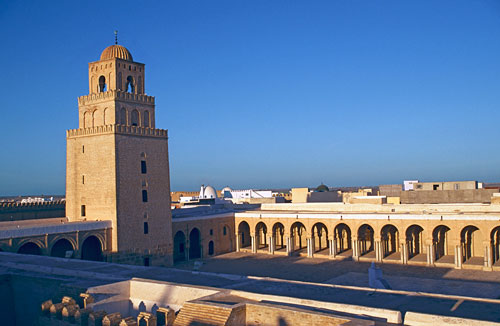
The great Mosque of Kairouan

The Mosque of Sultan Ahmed

Taj Mahal
Current Applications:


Extra Credit:The geometric design in Islamic Design
https://www.youtube.com/watch?v=pg1NpMmPv48
Images:
The great Mosque of Kairouan
The Mosque of Sultan Ahmed
Taj Mahal
Current Applications:
Extra Credit:The geometric design in Islamic Design
https://www.youtube.com/watch?v=pg1NpMmPv48
Monday, February 8, 2016
Romanesque
The emperor at the time, Charles the Great, Encouraged learning, arts, preserving and copying Roman literature, and encouraged building using the technology of Roman structures. Romanesque churches had semicircular arch and vaults, plans from early christian basilica, and they added a side chapel in the transcript. During this time, they also had different types of vaults that were widely used, the barrel vault, the groin vault, and the ribbed vault. Different from the Roman period, Romanesque had roofs made of masonry and not wood. They also used rich tapestries and gilded sculptures. The type of ornament they used were stone carvings that taught and illustration to people. It was an image of Christ draped in swirled clothing extending his hands to various groups of people in the world. As for residential homes, not many survived due to the wood structure that was also made of mud, twigs, and dirt for the floors. Two types of chairs that were significant during this period was the Throne of Dagobert and the Throne of Charlemagne.
Images:

Types of Vaults

Interior of a Romanesque church

Throne of Charlemagne
Current Applications:


Extra Credit: https://www.youtube.com/watch?v=rSiD5Jinpuw
Images:
Types of Vaults
Interior of a Romanesque church
Throne of Charlemagne
Current Applications:
Extra Credit: https://www.youtube.com/watch?v=rSiD5Jinpuw
Saturday, February 6, 2016
Review - Byzantine
Katie- Katie's blog post was straight to the point of what we went over in class. She touched on all the information we were presented with on the power point. Very informational and her current application photos are very interesting and unique.
Kiera- Kiera's blog post was very lengthy and full of so much information on the Byzantine era. I really like how she went into a lot of detail about the domes during this time. She also chose great past and present images to go along with her information on them.
Kiera- Kiera's blog post was very lengthy and full of so much information on the Byzantine era. I really like how she went into a lot of detail about the domes during this time. She also chose great past and present images to go along with her information on them.
Review - Early Christian
Haley- In Haley's blog post she covered the history of this period, how Christians arranged their homes, and they type or architecture and materials they used in their homes and furniture. She covered everything we went over in class and chose images that represent the time period very well.
Holli- Holli covered so much information on the Early Christian time period. She went into great detail about every aspect of this period we went over in class. She also chose images that went very well with what she discussed. Overall a great blog post.
Holli- Holli covered so much information on the Early Christian time period. She went into great detail about every aspect of this period we went over in class. She also chose images that went very well with what she discussed. Overall a great blog post.
Wednesday, February 3, 2016
Byzantine
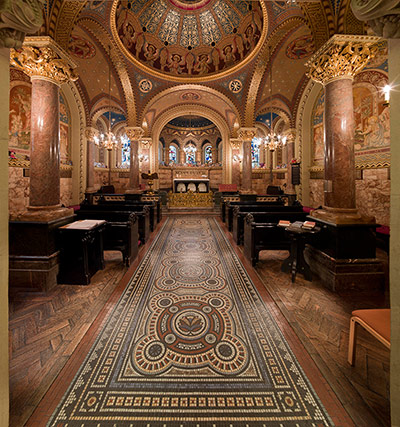
The Byzantine period was from 330-1453 CE. During this time, the Byzantine Empire was the longest political entity in European history. It was associated with the Eastern culture and influence by the Greeks and Orient. Constantinople became the capital of Roman empire which is current day Istanbul. The basilica plan changed to a more centralized plan. There was also a new architectural type, Domed Basilica that was a type of construction called pendentives. They were constructed in a way to catch the most sunlight. A famous church during this time was the Hagia Sophia. It was the main cathedral in Constantinople. The central plan included circle windows which gave the massive dome a sense of an importance exterior. This church was known as the church of Holy Wisdom. Byzantine architecture consisted of multiple domes, a central plan including a Greek cross plan, round arches and arcades, mosaics, alternating stone colors or stone and brick. The buildings that remain today are churches and temples. The flooring is tiled in marble, often with geometric designs and the surfaces on the walls or ceilings were ornamented with marble, frescos, mosaics, and alabaster.
Images:


Interior of the Hagia Sophia
Current Applications:


Extra Credit: https://www.youtube.com/watch?v=CdC_1ffEADI
Images:
Interior of the Hagia Sophia
Current Applications:
Extra Credit: https://www.youtube.com/watch?v=CdC_1ffEADI
Monday, February 1, 2016
Early Christian
The Early Christian period was from 330-800 CE. This religion began with the death of Christ. The Christianity posed a threat to the Roman Empire. Many adherents to the Christian faith were of lower class. The emperor, Constantine recognized Christianity as a religion in 313 CE. He legalized Christianity through the Edict of Milan. It became an official religion of with all rights and privileges of other state religions. Constantine believed he saw a vision of a cross as a sign from God to legalize Christianity and also believed it would help him win the battle of Milvian Bridge. Early Christians met in homes or existing buildings. They ended up needing a space of just worship. Current Roman temples were not structured to accommodate Christian group worship. Old St. Peter's Cathedral in Rome was built in 330 CE. It was filled with masonry walls clerestory windows, wooden roofs, and wood truss ceilings. The interiors were filled with frescos of biblical accounts from the Old and New Testament. In Italy and Spain, the Sant' Apollinare in Classe was built between 535-538 CE. It had 24 columns of Greek marble, Mullion windows with three openings, a triumphal arch, and a semi vaulted apse covered with mosaics. Furniture during this time was very elaborate and richly decorated with carving and jewels. The style of the furniture follows the Roman style for furniture.
Images:

Old St. Peter's Cathedral

Sant' Apollinare in Classe

Current Applications:


Modern day Christian Churches
Extra Credit:
https://www.youtube.com/watch?v=p17bBVA4EWA
Images:
Old St. Peter's Cathedral
Sant' Apollinare in Classe
Current Applications:
Modern day Christian Churches
Extra Credit:
https://www.youtube.com/watch?v=p17bBVA4EWA
Subscribe to:
Posts (Atom)